10 Amazing Aviation Facts That Will Change the Way You Think About Flying

Ethan Reynolds
November 11, 2024
Aviation is often seen as a modern marvel, bridging vast distances and connecting people across the globe at unprecedented speeds. However, the intricacies of flight and the science of aviation can often be overlooked, leaving many unaware of just how fascinating this field truly is. In this article, we’ll explore ten amazing aviation facts that promise to change the way you think about flying.
1. The Wright Brothers Were Not the First to Fly
While Orville and Wilbur Wright are credited with inventing the first successful airplane, they were not the first individuals ever to achieve powered flight. That honor goes to Gustave Eiffel, the man who designed the Eiffel Tower, and his assistant, who flew a powered glider in 1905. The Wright brothers refined the concept and made their famous flight in 1903, but they were building on the successes and failures of those who came before them.
2. Planes Can Fly Without Power
It’s a common myth that an airplane needs its engine to stay aloft. In fact, airplanes are designed to glide. If an engine fails, pilots are trained to handle such emergencies by finding a suitable landing area and gliding down safely. Gliders, in particular, demonstrate this principle effectively, showcasing how air currents can provide lift even without an engine.
Aviation Has Unraveled the Mystery of Jet Lag
Jet lag remains a challenge for frequent flyers, but recent studies suggest ways to mitigate its effects. Understanding our body’s circadian rhythm can help travelers acclimatize more quickly to a new time zone. For instance, gradually adjusting your sleep schedule before a trip can lessen the impact of jet lag, a realization paved by scientific advancements in aviation psychology.
Birds Are Better at Flying Than Planes
It’s surprising but true: birds have been found to be more efficient flyers compared to planes. For example, birds utilize updrafts and can change their wing positions dynamically to capture air currents, allowing them to fly vast distances without tiring. Engineers continually study the flight mechanisms of birds to improve aircraft design, making our planes even more efficient and functional.
Commercial Flights Are Surprisingly Safe
Statistically speaking, air travel is one of the safest modes of transportation. According to the National Safety Council, the odds of dying in an airplane accident are about 1 in 11 million. To put that in perspective, you’re more likely to be injured driving a car than flying on a commercial airliner. Advanced technologies, rigorous training, and strict regulations have dramatically reduced the chance of accidents in aviation.
Planes Are Built to Withstand Severe Weather
Aircraft are designed with extreme conditions in mind. The materials used in modern aircraft can withstand turbulence, lightning strikes, and extreme winds. In fact, planes undergo rigorous testing to ensure that they can handle these stressful situations, reassuring passengers that their safety is paramount.
Air Traffic Control Uses Complex Calculations
Air traffic controllers are the silent guardians of our skies, managing thousands of flights every day. They utilize advanced algorithms and real-time data to avoid collisions and ensure that planes maintain safe distances from one another. This high level of coordination is essential to keeping travelers safe and maintaining the efficiency of aviation.
Flying Can Affect Your Sense of Time
Have you ever felt like time moved differently while flying? This phenomenon is known as the “time dilation effect.” According to Einstein’s theory of relativity, time passes differently depending on your speed and gravitational field. While the effect is minuscule at commercial flight altitudes, it’s a fascinating reminder of how aviation intersects with physics and our understanding of time itself.
The Cockpit of an Airliner Is Similar to a Spacecraft
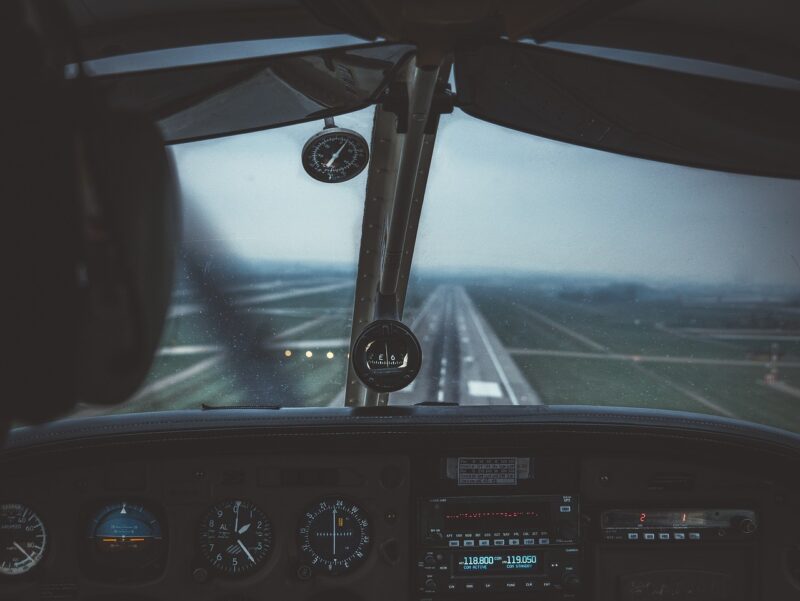
The advanced technology found in a modern cockpit is akin to that of a spacecraft. Equipped with multiple screens, navigational systems, and automation features, pilots today use sophisticated instruments to monitor and control flights. This modernization has enhanced the pilot’s ability to manage longer flights and has made air travel more efficient.
Flying Reduces Stress and Boosts Happiness
Interestingly, studies have shown that flying can have psychological benefits. The thrill of takeoff and the sensation of being above the clouds often evoke feelings of joy and excitement in passengers. The change of scenery and the anticipation of reaching a new destination can provide a much-needed escape from daily stresses, reinforcing the idea that flying is not just a mode of transport but also a pathway to happiness.
Conclusion: A New Appreciation for Aviation
From its early beginnings to the advanced technology of modern aircraft, aviation has made an indelible impact on our world. Understanding these amazing facts about flying not only enhances our knowledge but also deepens our appreciation for the incredible feats humans have achieved in the skies. So the next time you board a plane, remember these astonishing elements that make aviation one of humanity’s greatest achievements.