How Ancient Civilizations Predicted Eclipses with No Modern Technology

Jack Avery
November 9, 2024
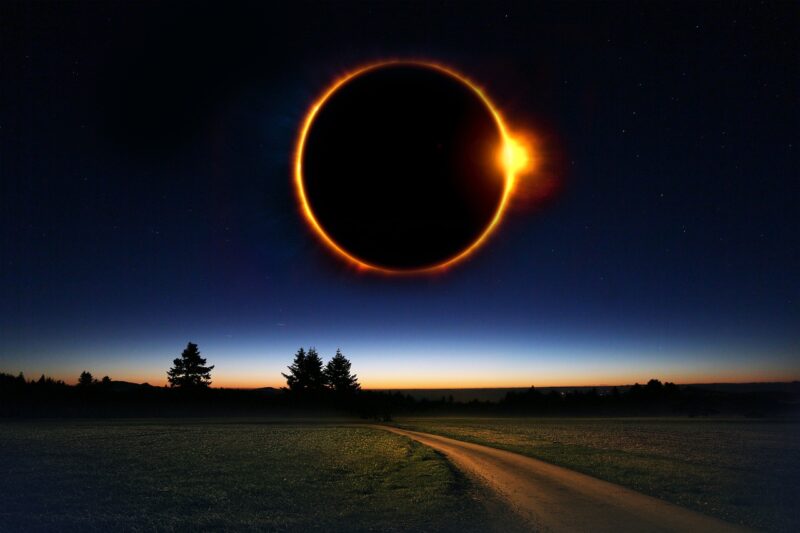
Eclipses, whether solar or lunar, have captivated humanity for centuries. These celestial events create awe, wonder, and sometimes fear, prompting ancient civilizations to seek explanations and predictions. Despite having no modern technology or sophisticated scientific tools, early astronomers demonstrated impressive skills in observing and predicting eclipses. This article delves into the fascinating methods used by ancient civilizations to foresee these cosmic spectacles.
1. Understanding Eclipses: The Basics
An eclipse occurs when one celestial body moves into the shadow of another. Two primary types of eclipses happen:
- Solar Eclipse: Occurs when the moon passes between the Earth and the sun, blocking the sun’s light either partially or fully.
- Lunar Eclipse: Happens when the Earth comes directly between the sun and the moon, causing the Earth’s shadow to cover the moon.
Understanding the cause of eclipses was crucial for ancient civilizations. They needed to track celestial movements meticulously, recognizing patterns that allowed for eclipse predictions.
2. Ancient Babylon: The Birthplace of Astronomical Predictions
The Babylonians were among the first to record astronomical observations systematically. From around 1800 BCE, they began documenting the movements of celestial bodies on clay tablets.
Key Contributions:
- Saros Cycle: The Babylonians recognized the Saros cycle, a period of approximately 18 years, 11 days, and 8 hours, after which eclipses repeat. This cycle enabled them to predict future eclipses accurately.
- Lunar Observations: By recording the positions of the sun and moon over long periods, they detected patterns that helped forecast lunar eclipses.
Their meticulous observations laid the groundwork for celestial navigation and the study of the heavens, influencing later civilizations.
3. The Ancient Greeks: Philosophy Meets Astronomy
The Greeks built on Babylonian knowledge, infusing astronomical studies with philosophy and mathematics.
Key Figures:
- Aristarchus of Samos: Proposed a heliocentric model, paving the way for a deeper understanding of eclipse mechanics.
- Hipparchus: Developed a geometric model to explain eclipses and was one of the first to discuss the concept of the precession of equinoxes, enhancing eclipse predictions.
- Ptolemy: Compiled the astronomical knowledge of his time, and his work, the Almagest, included methods for predicting eclipses based on mathematical calculations.
While the Greeks did not invent predictive methods, they refined existing ones, weaving mathematics into the fabric of astronomical observation.
4. The Mayans: Masters of Celestial Events
The Mayans possessed an intricate understanding of astronomy, which was central to their culture and religion. They developed complex calendars that allowed them to predict solar and lunar eclipses.
Key Practices:
- Long Count Calendar: They utilized this calendar to forecast astronomical events, including eclipses, with incredible accuracy.
- Observational Platforms: Structures like El Caracol at Chichen Itza served as observatories for celestial observations, enhancing their predictive capabilities.
- Codices: The Mayans recorded their predictions and observations in codices, some of which have survived to this day, showcasing their advanced knowledge.
This meticulous attention to the stars allowed the Mayans to predict eclipses years in advance, marking them as one of the most advanced astronomical cultures in history.
5. Ancient China: Celestial Records and Divination
In Ancient China, eclipses were viewed not only as astronomical events but also as omens of political significance. The Chinese developed detailed records of heavenly phenomena.
Key Innovations:
- Horse’s Neck Method: A divination technique used to interpret celestial occurrences, which included eclipse predictions.
- The Xia Calendar: This calendar featured sunspot cycles and was used to track eclipses, enabling predictions based on observations over centuries.
- Records of Eclipses: Ancient records, including those from astronomers like Zhang Heng, documented eclipses’ occurrence and provided insight into the predictive methodologies used by ancient scholars.
Through these techniques, ancient Chinese astronomers could predict eclipses with considerable accuracy, demonstrating their advanced observational skills.
6. Ancient Indian Astronomy: The Siddhantic Tradition
In ancient India, astronomy was deeply linked to religion and philosophy. Indian astronomers, known as Siddhantic astronomers, made significant contributions to eclipse prediction.
Key Contributions:
- Siddhanta Texts: These mathematical and astronomical texts provided formulas for predicting eclipses and understanding planetary movements. Notable texts include the Surya Siddhanta, which detailed methods for determining the timing of eclipses.
- Star Charts: Indian astronomers developed star charts used in conjunction with lunar and solar calendars to enhance their predictive abilities concerning eclipses.
The precision with which ancient Indian astronomers predicted eclipses illustrates the advanced nature of their astronomical knowledge, which influenced both eastern and western astronomy.
Conclusion: The Legacy of Ancient Eclipse Predictors
The methods employed by ancient civilizations to predict eclipses, despite the lack of modern technology, highlight their extraordinary observational skills and intellectual ingenuity. From the Babylonians’ discovery of the Saros cycle to the Mayans’ complex calendar systems, these early astronomers laid the groundwork for modern astronomy and demonstrated that knowledge of the cosmos was not limited to the use of advanced tools. Their legacies live on, enriching our understanding of the universe and inspiring awe for the celestial events that continue to occur today. Understanding their methods can serve as a reminder of our enduring fascination with the skies above us.
Further Reading
For those interested in delving deeper into the world of ancient astronomy, consider exploring the following books:
- “The History of Astronomy in Ancient Times” by John Charles Green
- “Eclipse: Precision and Prediction from Ancient Cultures to the Top of the Universe” by John R. Kessler
- “Ancient Astronomy: Observations from the Last 5,000 Years” by K. R. Ramachandran
This exploration into ancient civilizations’ breathtaking ability to predict eclipses provides not just a glimpse into their scientific capabilities but also highlights the rich tapestry of humanity’s quest for knowledge about the cosmos.