The Science of Rainbows: Why We See Them and the Colors They Show

Ryan Pierce
November 12, 2024
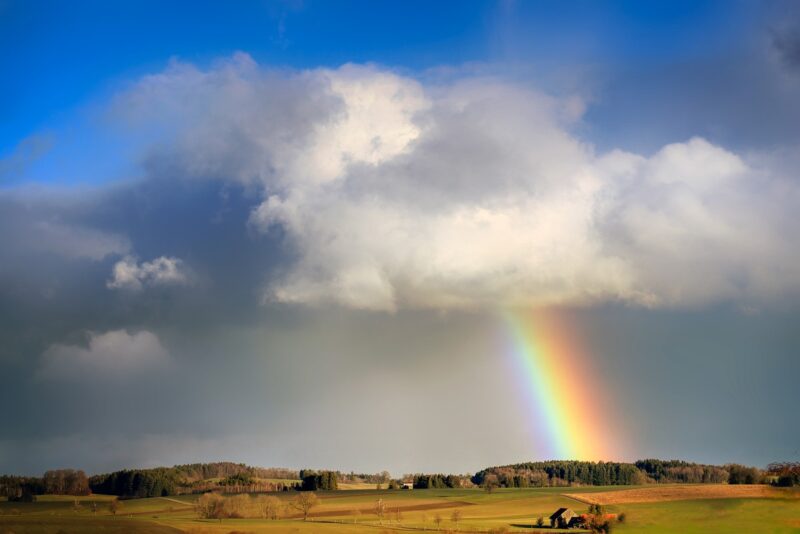
Rainbows have captured the imagination of humans for centuries, featuring prominently in art, literature, and mythology. But what really causes these beautiful arcs of color to appear in the sky? In this article, we’ll explore the science behind rainbows, from the fundamental physics of light refraction to the stunning spectrum of colors that we can observe.
1. Understanding Light and Its Properties
Before we delve into rainbows themselves, it’s crucial to understand the characteristics of light. Light is a form of electromagnetic radiation visible to the human eye. It travels in waves and can exhibit behaviors like reflection, refraction, and dispersion.
Light travels in straight lines until it interacts with surfaces or mediums of different densities. When light travels from one medium to another—like from air into water or glass—it slows down and changes direction, a phenomenon known as refraction.
2. Formation of Rainbows: The Basics
Rainbows typically occur when sunlight encounters raindrops in the atmosphere. Here’s a step-by-step breakdown of how a rainbow forms:
- Step 1: The Sun Shines. Rainbows are most common when there are still rain showers present and the sun is shining brightly. The light from the sun must enter a raindrop to begin the rainbow process.
- Step 2: Refraction in the Raindrop. As sunlight enters a raindrop, it slows down and bends due to refraction. This bending causes the different colors within the light spectrum to spread apart, as each color has a different wavelength. Shorter wavelengths (blue and violet light) bend more than longer wavelengths (red light).
- Step 3: Reflection. Inside the raindrop, the bent light reflects off the back wall of the droplet. This internal reflection helps to direct the light back toward the exit point of the droplet.
- Step 4: Refraction on Exit. When the light exits the raindrop, it refracts once more, bending again as it moves from the water back into the air. This further separates the colors, creating the rainbow effect we see in the sky.
The overall effect is that rainbows appear as circular arcs, with red on the outer edge and violet on the inner edge. Observing a rainbow is contingent on the viewer’s position relative to the sun and the rain.
3. The Spectrum of Colors: Understanding ROYGBIV
The colors of the rainbow can be remembered with the acronym ROYGBIV, representing the sequence of colors:
- Red
- Orange
- Yellow
- Green
- Blue
- Indigo
- Violet
Each color results from the varying wavelengths of light. For instance:
– Red light has a longer wavelength, while violet has a shorter wavelength, causing them to refract at different angles during both entries and exits from the raindrop.
4. Types of Rainbows
Rainbows can take many forms, depending on the conditions in which they appear. Here are some variations:
- Primary Rainbow: The most common type, created by a single reflection inside the raindrop. This rainbow displays the full spectrum of colors in the predictable ROYGBIV pattern.
- Secondary Rainbow: This occurs outside the primary rainbow and is the result of two internal reflections. The colors appear in the reverse order (VIBGYOR) and are usually fainter than the primary rainbow.
- Supernumerary Rainbows: These faint, closely spaced bands of color can appear inside the primary rainbow. They result from the interference of light waves, creating the illusion of additional, more vivid bands.
5. Cultural Significance of Rainbows
Beyond their fascinating science, rainbows have vast cultural significance. Across various cultures, the rainbow symbolizes hope, peace, and promise. For instance:
– In the Bible, the rainbow is a symbol of God’s covenant with humanity after the flood, representing a promise of never flooding the Earth again.
– In various Native American cultures, the rainbow is seen as a bridge between the physical and spiritual worlds.
– In many modern contexts, rainbows symbolize diversity and inclusion, prominently featured in LGBTQ+ pride movements.
6. Conclusion: The Beauty of Natural Phenomena
Rainbows serve as a beautiful reminder of the amazing natural phenomena that occur when physics interacts with everyday elements. From the science of light refraction to the cultural meanings embedded in their imagery, rainbows continue to inspire wonder and curiosity. Next time you witness a rainbow, you’ll be equipped with knowledge about its formation and the extraordinary beauty it brings, transcending both science and art.
So, keep your eyes on the sky after a rain shower; you may just be rewarded with a fleeting glimpse of this stunning display of nature.