The Most Ingenious Weapons in History and How They Changed Warfare

Olivia Barrett
November 11, 2024
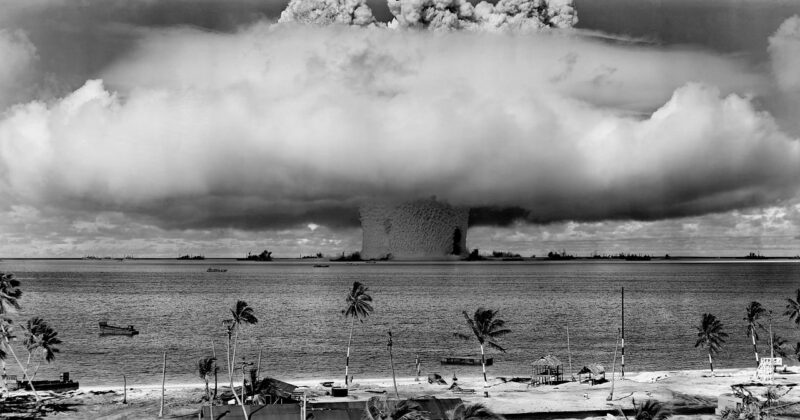
War has been an integral part of human history, shaping civilizations and landscapes. Throughout the ages, one of the most notable drivers of warfare evolution has been technological advancement. Ingenious weapons, both simple and complex, have altered the course of battles and, ultimately, the fate of nations. In this article, we will explore some of the most innovative weapons throughout history and how they transformed warfare as we know it.
1. The Bow and Arrow: The Silent Reapers
The bow and arrow have been used for millennia and were pivotal in the early development of ranged warfare. Unlike spears that required close combat, the bow allowed archers to strike from a distance, changing the dynamics of battle.
– Historical Significance: Ancient civilizations like the Assyrians and the Mongols employed archers to devastating effect. The Mongolian horse archers, skilled in fast-paced mobility and precision shooting, were able to conquer vast territories without the need for heavy armor or siege equipment.
– Evolution: As manufacturing processes advanced, materials such as composite woods and later, steel, enabled the creation of more powerful bows, leading to the longbow of medieval England and its crucial role in battles such as Agincourt.
This weapon not only changed combat tactics but also democratized warfare, where the common foot soldier could potentially take down armored knights from a distance.
2. Gunpowder and Firearms: The Game Changer
Gunpowder, invented in 9th century China, revolutionized warfare on a global scale. By the time firearms were introduced in Europe, the nature of conflict had evolved dramatically.
– The Impact of Gunpowder: The development of cannons redefined siege warfare, allowing armies to breach fortified walls that had stood for centuries. Fortresses needed to be redesigned to withstand artillery fire, heralding the age of star forts.
– Firearms: As firearms became more sophisticated, they led to the decline of traditional armored knights, as even the least trained soldier could now kill from a distance.
By the 18th century, muskets became standard infantry weapons, and tactics evolved to account for the gun’s lethality, forever changing the way battles were fought.
3. The Gatling Gun: The Precursor to Modern Machine Guns
Invented during the American Civil War, the Gatling gun was the first true mechanical firearm, capable of firing multiple rounds in quick succession.
– Significance in Warfare: The Gatling gun increased the volume of fire available to infantry substantially. It was used to great effect in the later stages of the civil war and in conflicts beyond, such as in the Spanish-American War.
– Cultural Impact: This weapon demonstrated the shift towards mechanization in warfare, paving the way for future automatic weapons that would dominate the 20th century battlefields.
The sheer destructive capability of the Gatling gun forced armies to rethink troop formations and tactics, shifting away from massed infantry assaults.
4. The Tank: Rolling Fortresses
The tank emerged during World War I as a response to the stalemated trench warfare that characterized the conflict.
– Overcoming Trench Warfare: The introduction of tanks meant that armies could break through enemy lines, crush barbed wire, and withstand small-arms fire. This innovation revolutionized mobility on the battlefield.
– Technological Evolution: Initially slow and cumbersome, tanks underwent significant enhancements in World War II, becoming faster and more efficient, with improved armor and weaponry. The blitzkrieg tactics of the Germans highlighted the effectiveness of tanks working in conjunction with infantry and aircraft.
Thus, the tank changed not only the mechanics of warfare but also how wars were strategized and carried out, ushering in an era of mechanized warfare.
5. Drones: The Future of Warfare
In recent years, drones have emerged as one of the most revolutionary weapons in modern warfare. Offering a unique blend of surveillance and precision strikes, they represent a new future.
– Surveillance Capabilities: Drones allow for real-time monitoring of enemy movements without risking human lives. This intelligence-gathering capability reshapes tactics and decision-making in real time.
– Remote Warfare: With drones, militaries can carry out strikes and operations from thousands of miles away, redefining the physicality of combat. While this technology brings efficiency, it also raises questions about ethics and accountability in warfare.
Drones illustrate how technology continues to change the fabric of warfare, emphasizing precision over brute force.
Conclusion: The Ongoing Evolution of Warfare
The ingenious weapons developed throughout history have not only changed the mechanics of warfare but have also influenced politics, society, and the very nature of human conflict. They have enabled new strategies, altered troop dynamics, and in many cases, defined eras of history.
As we move into the future, it is clear that the cycle of innovation will continue. The emergence of new technologies, from cyber warfare to artificial intelligence, will further reshape warfare in ways we can only begin to understand. Just as the bow and arrow set the stage for distant combat, modern innovations will leave their mark on future generations and the concept of warfare itself.
Understanding these changes is crucial, not only for military historians but for anyone interested in the trajectory of human civilization and its often turbulent history with conflict.