The Story of the Most Important Aviation Breakthroughs in Modern History

Lucas Grant
November 11, 2024
Aviation has fundamentally changed the way humanity interacts with the world. From the first powered flight to the jet age and beyond, every advancement in aviation technology has paved the way for a more interconnected globe. In this article, we will explore some of the most pivotal breakthroughs in aviation history, their significance, and how they have shaped modern travel.
1. The Wright Brothers and the Birth of Powered Flight
On December 17, 1903, Orville and Wilbur Wright made history at Kitty Hawk, North Carolina, by achieving the first powered flight in a heavier-than-air machine. The Wright Flyer flew for just 12 seconds but covered a distance of 120 feet. This monumental event not only marked the dawn of powered flight but also demonstrated that controlled, sustained flight was possible.
The Wright brothers’ meticulous approach, which included the development of a three-axis control system, enabled pilots to steer the aircraft effectively. Their work laid the foundation for future aviation innovations and transformed humanity’s ability to traverse long distances quickly.
2. The Advent of the Jet Engine
The introduction of the jet engine in the 1940s revolutionized air travel. Frank Whittle, in the UK, and Hans von Ohain, in Germany, independently developed turbojet engines that significantly increased aircraft speed and efficiency. The first successful jet aircraft, the British De Havilland Comet, made its inaugural flight in 1949 and heralded the age of commercial jet travel.
Jets could fly at higher altitudes and faster speeds than their piston-engine counterparts, drastically reducing travel time across continents. The jet engine enabled airlines to expand their routes and serve a growing global market, leading to the rapid proliferation of air travel in the second half of the 20th century.
3. The Boeing 707 and the Birth of Commercial Aviation
The Boeing 707, which first flew in 1954, was the first successful commercial jetliner that captured the public’s imagination. With its sleek design and ability to carry more passengers over longer distances, the 707 transformed how people traveled. It marked the beginning of the jet age in commercial aviation and made air travel accessible to the masses.
Airlines like Pan Am and Trans World Airlines were quick to adopt the 707, signaling a new era of international travel. Travel time between major cities shrank, and air travel became a viable alternative to ocean liners and trains. The Boeing 707 set the standard for future commercial aircraft and solidified aviation’s place in modern transportation.
4. The Concorde: Supersonic Travel
In 1969, the Concorde made its first test flight, heralding the era of supersonic travel. Capable of flying at speeds over twice the speed of sound (Mach 2.04), the Concorde could transport passengers from New York to London in under three and a half hours. It showcased the heights of engineering marvel in aviation.
Despite its groundbreaking technology and luxurious accommodations, the Concorde faced challenges, including high operational costs and noise regulations, leading to its retirement in 2003. However, it remains an important symbol of what supersonic travel once represented—a glimpse into the future of aviation.
5. The Rise of Computerized Flight Instruments
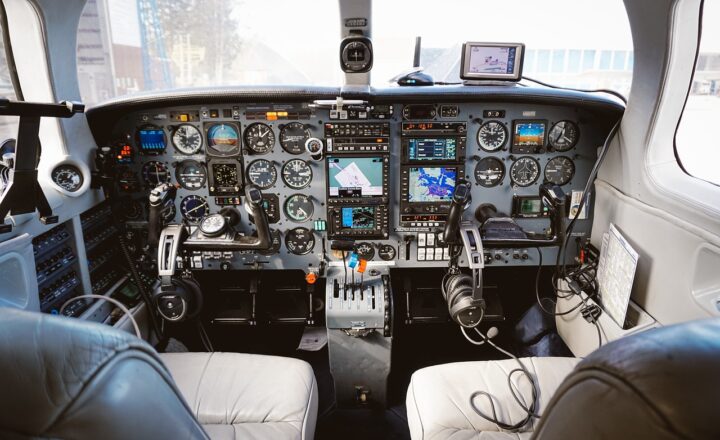
The evolution of avionics technology, particularly in the late 20th century, has dramatically enhanced flight safety and efficiency. The advent of computerized flight instruments and automation, such as the Glass Cockpit system, has made flying safer and less reliant on traditional analog systems.
Modern aircraft now feature advanced avionics that assist pilots with navigation, monitoring systems, and autopilot functions. These innovations have allowed pilots to focus more on strategic decision-making rather than manual operations, reducing the risk of human error.
6. Unmanned Aerial Vehicles (UAVs) and the Future of Aviation
In recent years, the development of unmanned aerial vehicles, or drones, has opened up new possibilities in the aviation sector. UAVs are being used not just for military applications but also for commercial deliveries, surveillance, agriculture, and even scientific research.
As technology continues to advance, we are witnessing the rise of urban air mobility solutions and the integration of AI in piloting systems. Companies like Uber and Boeing are investing in air taxis, signaling the next frontier in aviation, where personal air travel could become commonplace.
Conclusion
Aviation has come a long way since the Wright brothers made their first powered flight. Each breakthrough has contributed to a more connected world, shrinking distances and enabling diverse global interactions. The future of aviation looks equally promising as we stand on the brink of new technologies that will continue to transform how we travel, work, and live.
Explore the story of human ingenuity and innovation that has taken us from a bumpy flight at Kitty Hawk to the possibility of flying taxis above our cities. Each milestone in aviation history reminds us of our ambition to conquer the skies and connect our world like never before.