The Fall of the Berlin Wall: The End of the Cold War and a New Era in Europe

Oliver Sutton
October 16, 2024
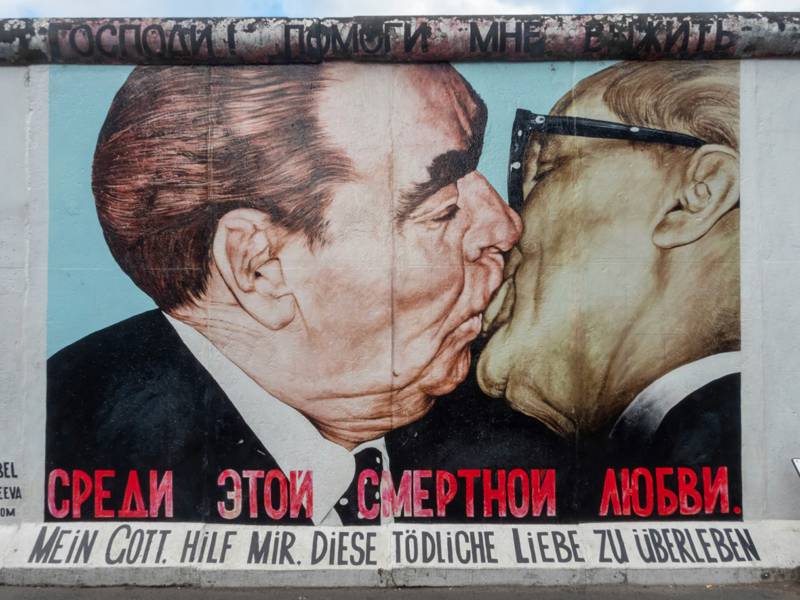
On November 9, 1989, the Berlin Wall, a powerful symbol of the Cold War’s division between East and West, fell. This momentous event not only led to the reunification of Germany but also signaled the beginning of the end for the Soviet Union and the Cold War. This article examines the historical context, the events leading up to the fall, and the profound consequences that reshaped Europe and the world.
The Berlin Wall: A Symbol of Division
Post-World War II Germany
- Allied Occupation: Germany was divided into four zones controlled by the U.S., the U.K., France, and the Soviet Union.
- Emergence of East and West Germany: In 1949, the Federal Republic of Germany (West) and the German Democratic Republic (East) were established.
Construction of the Wall
- Mass Emigration: Between 1949 and 1961, approximately 2.7 million East Germans fled to the West.
- Erecting the Barrier: On August 13, 1961, East Germany began building the Berlin Wall to prevent further defections.
- Physical Structure: Spanned 155 kilometers, fortified with guard towers and patrols.
The Cold War Context
Ideological Struggle
- Capitalism vs. Communism: The U.S. and its allies promoted democratic capitalism, while the Soviet Union spread communist ideology.
- Proxy Conflicts: Global tensions manifested in wars like Korea and Vietnam.
Nuclear Arms Race
- Mutually Assured Destruction (MAD): Both superpowers amassed nuclear arsenals.
- Fear and Paranoia: Shaped international relations and domestic policies.
Factors Leading to the Fall
Political Changes in the Soviet Union
- Mikhail Gorbachev’s Reforms: Introduced policies of glasnost (openness) and perestroika (restructuring).
- Reduced Intervention: Signaled a shift away from strict control over Eastern Bloc countries.
Growing Unrest in East Germany
- Economic Struggles: Inefficiencies and shortages led to dissatisfaction.
- Demands for Freedom: Citizens protested for political reforms and human rights.
Mass Protests and Escapes
- Hungary Opens Borders: In May 1989, Hungary removed its border fence with Austria, allowing East Germans to flee.
- Demonstrations in Leipzig: Peaceful protests grew in size, pressuring the government.
The Fall of the Wall
November 9, 1989
- Confused Announcement: East German official Günter Schabowski mistakenly stated that travel restrictions were lifted immediately.
- Public Reaction: Thousands gathered at border crossings, overwhelming guards.
- Border Opened: Guards eventually allowed people to cross freely.
Global Response
- Celebrations: Scenes of jubilation as families reunited.
- Media Coverage: Broadcasted worldwide, symbolizing hope and change.
Consequences and Aftermath
German Reunification
- Political Process: Formal reunification occurred on October 3, 1990.
- Economic Integration: Challenges in merging two different economic systems.
- Social Adjustments: Addressing disparities in employment, wages, and living standards.
Collapse of the Soviet Union
- Eastern Bloc Transformations: Other communist regimes faced revolutions and reforms.
- End of the Cold War: Marked a shift in global power dynamics.
European Integration
- Expansion of the European Union: Former Eastern Bloc countries joined the EU.
- NATO Enlargement: Extended membership to Eastern European nations.
Global Impact
Shift in International Relations
- Unipolar World: The U.S. emerged as the sole superpower.
- Redefinition of Alliances: New partnerships and diplomatic relations formed.
Economic Globalization
- Market Economies: Transition from planned economies to market-based systems.
- Investment Opportunities: Western businesses entered new markets.
Challenges Post-Fall
Economic Disparities
- Unemployment: Job losses due to industry closures in the East.
- Infrastructure Needs: Investment required to modernize facilities and services.
Cultural Differences
- Ostalgie: Nostalgia for aspects of life in East Germany.
- Identity Issues: Navigating a unified national identity.
Political Extremism
- Rise of Far-Right Groups: Exploiting economic and social frustrations.
- Addressing Inequality: Efforts to promote inclusivity and cohesion.
Legacy of the Berlin Wall
Memorials and Education
- Berlin Wall Memorial: Preserves a section of the wall and educates visitors.
- Documentation Centers: Provide historical context and personal stories.
Symbolism
- Freedom and Unity: Represents the triumph of human spirit over oppression.
- Warning Against Division: Serves as a reminder of the consequences of ideological conflicts.
Conclusion
The fall of the Berlin Wall was a watershed moment that not only reunited a nation but also reshaped the geopolitical landscape. It marked the end of decades-long tensions and opened the door to a new era of cooperation and integration in Europe. Reflecting on this history highlights the enduring human desire for freedom and the capacity for transformative change.