
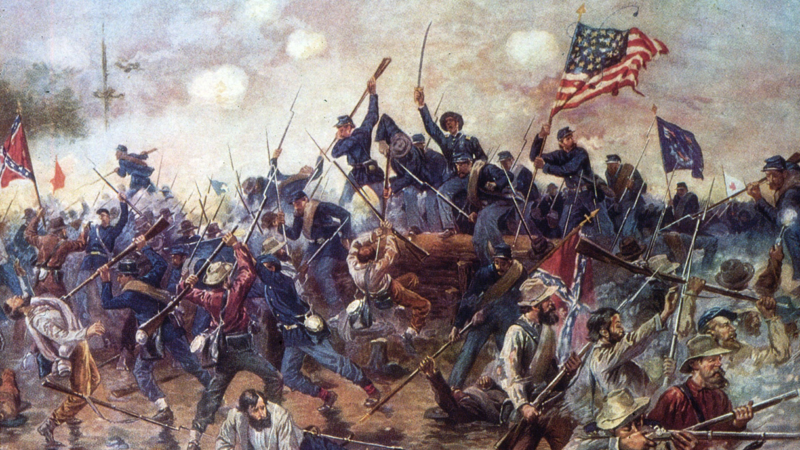
The American Civil War, fought from 1861 to 1865, stands as one of the most transformative periods in United States history. It was a conflict that pitted brother against brother and tested the very foundations of the nation. The war not only determined the survival of the Union but also led to the abolition of slavery, reshaping the social and political landscape of the country. This comprehensive article delves into the causes that ignited the war, the major events and battles that defined its course, and the profound consequences that emerged in its aftermath.
Causes of the Civil War
Slavery and Sectionalism
The most significant cause of the Civil War was the deep-seated issue of slavery.
- Economic Differences: The Southern economy relied heavily on agriculture and slave labor, while the North was more industrialized and favored wage labor.
- Moral Opposition: Abolitionist movements in the North condemned slavery as inhumane and immoral, increasing tensions.
States’ Rights vs. Federal Authority
The debate over the balance of power between state and federal governments fueled division.
- Nullification Crisis: Southern states argued they could nullify federal laws they deemed unconstitutional.
- Secession Threats: States believed they had the right to secede from the Union if their interests were threatened.
The Compromise Failures
Attempts to maintain a balance between free and slave states failed.
- Missouri Compromise (1820): Admitted Missouri as a slave state and Maine as a free state, setting a precedent for future admissions.
- Kansas-Nebraska Act (1854): Allowed new territories to decide on slavery through popular sovereignty, leading to violent conflicts known as “Bleeding Kansas.”
Election of Abraham Lincoln
Lincoln’s election in 1860 was the tipping point.
- Republican Platform: Lincoln opposed the expansion of slavery into new territories.
- Southern Secession: Following his election, eleven Southern states seceded, forming the Confederate States of America.
Major Events and Battles
Fort Sumter (April 1861)
- The Beginning: Confederate forces fired upon Fort Sumter in South Carolina, marking the start of the war.
- Union Response: Lincoln called for 75,000 volunteers to suppress the rebellion.
Battle of Antietam (September 1862)
- Bloodiest Single Day: Over 22,000 casualties in one day.
- Strategic Outcome: Stalemate, but gave Lincoln the opportunity to issue the Emancipation Proclamation.
Emancipation Proclamation (January 1863)
- Freedom Declaration: Declared all slaves in Confederate territories to be free.
- War Aim Shift: Transformed the war into a fight against slavery, discouraging European powers from supporting the Confederacy.
Battle of Gettysburg (July 1863)
- Turning Point: Major Union victory that halted Confederate General Robert E. Lee’s invasion of the North.
- Gettysburg Address: Lincoln’s speech redefined the purpose of the war, emphasizing liberty and equality.
Sherman’s March to the Sea (November-December 1864)
- Total War Strategy: General William T. Sherman led a destructive campaign through Georgia, targeting infrastructure and civilian property.
- Psychological Impact: Undermined Southern morale and capacity to continue the war.
Surrender at Appomattox Court House (April 1865)
- End of the War: General Lee surrendered to General Ulysses S. Grant.
- Terms of Surrender: Generous terms to facilitate reconciliation.
Consequences of the Civil War
Abolition of Slavery
- 13th Amendment (1865): Officially abolished slavery throughout the United States.
- Freedmen’s Bureau: Established to assist freed slaves with education, employment, and legal matters.
Reconstruction Era
- Rebuilding the South: Efforts to reintegrate Southern states and rebuild economies.
- 14th and 15th Amendments: Granted citizenship and voting rights to African American men.
Social and Economic Changes
- Industrial Growth: The North’s economy boomed, accelerating industrialization.
- Southern Economy: Devastated by the war, leading to sharecropping and economic hardship.
Racial Tensions and Segregation
- Black Codes: Laws in the South restricting the rights of African Americans.
- Rise of the Ku Klux Klan: White supremacist group formed to oppose Reconstruction efforts.
Strengthening of Federal Government
- Federal Authority: The war established the supremacy of the federal government over states.
- Legal Precedents: Set foundations for future civil rights legislation.
Legacy of the Civil War
Cultural Impact
- Literature and Art: Inspired works like Harriet Beecher Stowe’s Uncle Tom’s Cabin and Walt Whitman’s poetry.
- Memorials and Monuments: Erected to honor soldiers and significant events.
Ongoing Debates
- Confederate Symbols: Controversies over the display of Confederate flags and statues.
- Interpretations of History: Differing views on the causes and significance of the war.
Educational Importance
- Curriculum Inclusion: Studied extensively in American history courses.
- Lessons Learned: Highlights the dangers of division and the importance of unity.
Conclusion
The American Civil War was a defining moment that reshaped the nation’s trajectory. It resolved the contentious issue of slavery but also left deep scars that continued to influence American society. Understanding the causes, events, and consequences of the Civil War is crucial to grasp the complexities of the United States’ history and the ongoing struggles for equality and justice.