How the Renaissance Sparked an Age of Discovery and Innovation

Olivia Barrett
November 14, 2024
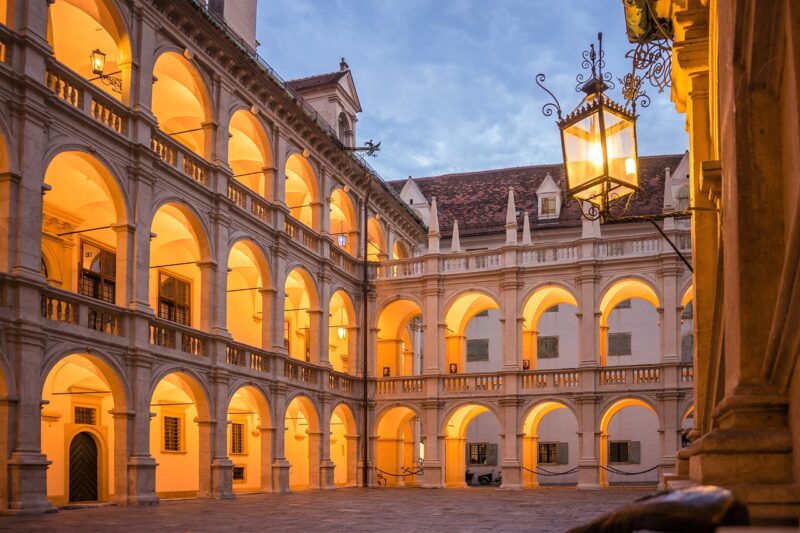
The Renaissance, a period spanning from the 14th to the 17th century, marked a profound transformation in Europe. It was an era characterized by a renewed interest in the classical arts and sciences, a wave of humanism, and an explosion of creativity and innovation that fundamentally reshaped society, culture, politics, and technology. This article delves into how the Renaissance sparked an age of discovery and innovation across multiple domains, paving the way for advancements that would influence generations.
1. Understanding the Renaissance: A Brief Overview
The Renaissance, which means “rebirth,” originated in Italy before spreading to the rest of Europe. It was a cultural movement that sought to revive and celebrate the ideals of Ancient Greece and Rome. As the feudal system waned, new ideas emerged, encouraging people to question established norms and seek knowledge beyond traditional confines.
The roots of Renaissance thought can be traced to several key factors:
- Humanism: A philosophical stance that emphasized the value of human beings, individual agency, and the study of classical texts. Humanists believed in educating the self through literature, philosophy, and the arts.
- Increased Trade and Commerce: As trade routes expanded, exposure to diverse cultures and ideas encouraged innovation in art, science, and technology.
- Advancements in Printing Technology: The invention of the printing press by Johannes Gutenberg in the mid-15th century made literature and knowledge accessible to the masses, accelerating the spread of new ideas.
Together, these factors created a fertile ground for discovery and innovation, establishing the Renaissance as one of history’s most remarkable periods.
2. The Age of Exploration
One of the most significant outcomes of the Renaissance was the Age of Exploration, which entailed the expansion of European powers looking for new trade routes and territories. Explorers like Christopher Columbus, Vasco da Gama, and Ferdinand Magellan embarked on perilous voyages that expanded the known world dramatically.
2.1 Motivations Behind Exploration
Several motivations spurred this wave of exploration:
- Economic Gain: The promise of wealth from spices, precious metals, and new trade routes drove many to seek discoveries beyond Europe.
- Religious Expansion: The spread of Christianity was seen as a moral imperative, with many explorers motivated to convert indigenous populations.
- Intellectual Curiosity: Renaissance humanism inspired a quest for knowledge, leading explorers to venture into unknown lands driven by curiosity and a desire for discovery.
The consequences of this exploration were profound: new trade routes were opened, cultures were exchanged, and the maps of the world were redrawn.
3. Innovations in Science and Technology
The Renaissance was a hotbed for scientific inquiry and technological innovation, fundamentally altering humanity’s understanding of the natural world.
3.1 The Birth of Modern Science
Figures such as Galileo Galilei and Nicolaus Copernicus revolutionized the field of astronomy, challenging traditional views of the cosmos. Copernicus’s heliocentric model posited that the Earth revolved around the Sun rather than the other way around, a radical shift that sparked further inquiry.
Galileo, often regarded as the father of modern observational astronomy, made significant strides with the telescope, revealing celestial phenomena previously unseen and challenging long-held beliefs about both science and religion.
3.2 Innovations in Medicine
The Renaissance also heralded significant advancements in medicine, with individuals like Andreas Vesalius challenging ancient Galenic theories. His work, “De humani corporis fabrica,” provided a detailed understanding of human anatomy through direct observation and dissections, laying the groundwork for modern biology and medical practices.
Similarly, the shift to empirical observation and experimentation in medicine exemplified the Renaissance commitment to inquiry, pushing the boundaries of knowledge and insights into body functions and health.
3.3 Engineering and the Mechanical Arts
The Renaissance wasn’t solely a period of intellectual growth; it also saw remarkable strides in engineering and invention. Thinkers like Leonardo da Vinci combined artistic creativity with empirical study to invent machines and technologies that were far ahead of their time, impacting fields from architecture to hydraulics.
4. Artistic Revolution
The Renaissance was equally a period of unprecedented artistic achievement, marked by groundbreaking changes in visual arts. It was characterized by a movement toward realism, perspective, and human emotion in art.
Iconic figures such as Michelangelo, Raphael, and Botticelli pushed artistic boundaries, emphasizing humanism and naturalism in their works. Techniques such as linear perspective transformed the way space was represented on canvas, giving depth and realism to paintings.
4.1 The Impact of Art on Society and Culture
Art during the Renaissance went beyond mere aesthetics; it became a vehicle for cultural and scientific discourse. Artworks served to convey messages, preserve history, and evoke emotions, impacting society at large. The patronage system, where wealthy individuals sponsored artists, led to monumental works that reflected not only personal tastes but also communal values and aspirations.
5. Conclusion: The Legacy of the Renaissance
The impact of the Renaissance cannot be understated; it was a catalyst that ignited an Age of Discovery and Innovation that shaped the future of the Western world. From exploration and science to art and culture, the Renaissance laid down the foundations of modern society and human thought.
The values of humanism, empirical inquiry, artistic exploration, and the quest for knowledge continue to resonate today, reminding us of the importance of curiosity, creativity, and the pursuit of understanding in our ever-evolving world. As we reflect on the Renaissance’s achievements, we are inspired to innovate and explore new frontiers, sustaining the spirit of this remarkable era for generations to come.