The History of Maps: How Cartography Shaped Our Understanding of the World

Oliver Sutton
October 30, 2024
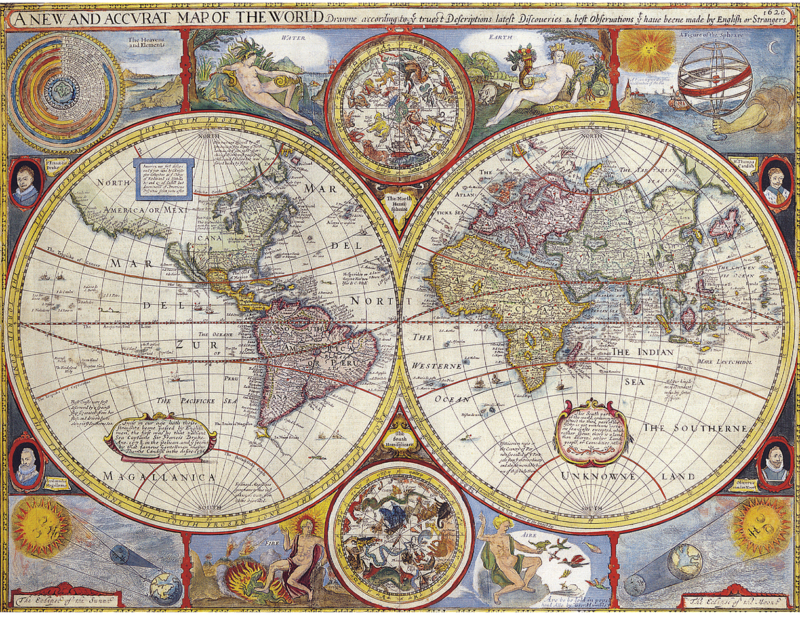
Maps have been instrumental in helping humanity understand and navigate the world. The history of cartography dates back thousands of years, evolving from simple representations of local areas to complex, accurate maps of the entire globe. In this article, we’ll explore how maps have shaped our understanding of the world and the fascinating evolution of cartography.
1. Early Maps: Pictorial Representations of the World
The earliest known maps were simple and symbolic, created by ancient civilizations to represent their surroundings and territory.
- Ancient Cave Maps: Evidence of early map-like drawings has been found in caves dating back 14,000 years.
- Babylonian Clay Tablets: Some of the oldest known maps are Babylonian clay tablets, depicting local rivers and settlements.
- Egyptian Cartography: Egyptians created early maps to navigate the Nile, aiding trade and agriculture.
2. Greek Contributions: The Birth of Geographical Science
Ancient Greek scholars made significant advances in cartography, viewing it as a scientific endeavor rather than mere representation.
- Anaximander’s World Map: Considered one of the first to depict the world as a circular shape with known lands.
- Ptolemy’s Geography: Ptolemy’s work introduced latitude and longitude, laying the foundation for modern mapping.
- Mathematical Geography: Greek scholars used mathematics to estimate Earth’s size and depict the curvature of the globe.
3. Medieval Cartography: Religious Maps and T-O Diagrams
During the medieval period, European maps were influenced by religious beliefs and symbolic representations.
- T-O Maps: These maps depicted the world as a circular disk, often placing Jerusalem at the center as a religious focal point.
- Mapping the Known World: Medieval maps included only known regions, with many mythical elements.
- Islamic Cartography: Islamic scholars contributed detailed maps, including al-Idrisi’s world map, which was highly accurate for its time.
4. The Age of Exploration: Mapping the New World
The Age of Exploration in the 15th and 16th centuries saw a surge in cartographic innovation as European explorers mapped newly discovered lands.
- Portolan Charts: Developed for navigation, these maps showed coastlines and harbors with remarkable accuracy.
- Mercator Projection: Gerardus Mercator’s projection allowed sailors to plot straight-line courses, revolutionizing navigation.
- Maps as Power Tools: Maps became symbols of power, as empires documented and claimed new territories.
5. The Scientific Revolution: Advances in Accuracy and Scale
In the 17th and 18th centuries, scientific advancements led to more accurate maps and the development of global cartography standards.
- Triangulation Method: Surveying techniques like triangulation improved map accuracy and scaling.
- National Mapping Projects: France and England began detailed mapping projects to create standardized maps of their territories.
- Longitude Problem: The invention of accurate clocks helped determine longitude, a major breakthrough in mapping.
6. Modern Mapping: From Paper to Digital
The 20th century brought digital advancements that revolutionized cartography, making maps more accessible and accurate than ever.
- Satellite Mapping: Satellite technology allowed for precise global mapping, transforming our understanding of Earth.
- GPS Navigation: Global Positioning System technology enabled real-time, location-based mapping.
- GIS Systems: Geographic Information Systems allowed for complex data layers on maps, used in environmental science, urban planning, and more.
7. Maps in the Digital Age: Interactive and Personalized Mapping
Today, maps are interactive and customizable, providing real-time data for users worldwide.
- Google Maps: Google Maps has become a daily tool, offering navigation, real-time traffic, and street views.
- Mapping Apps: Apps like Waze and Apple Maps provide interactive and user-driven navigation solutions.
- Data-Driven Insights: Modern mapping integrates data on traffic, weather, and population, enriching the map’s utility.
8. The Role of Maps in Society and Culture
Maps are more than just navigation tools; they reflect cultural, political, and historical perspectives.
- Political Influence: Maps can influence political boundaries, historical narratives, and national identities.
- Educational Tools: Maps help educate people about geography, history, and even climate change.
- Art and Expression: Cartographic art has become a popular medium for artistic expression and cultural representation.
Conclusion
From ancient cave paintings to modern digital tools, the history of maps reveals the evolution of human understanding and exploration. Maps have guided explorers, empowered nations, and educated societies. As cartography continues to evolve, maps remain invaluable tools for connecting people to the world around them.